
Cart
John Hodgson
fuadach nan gaidheal I
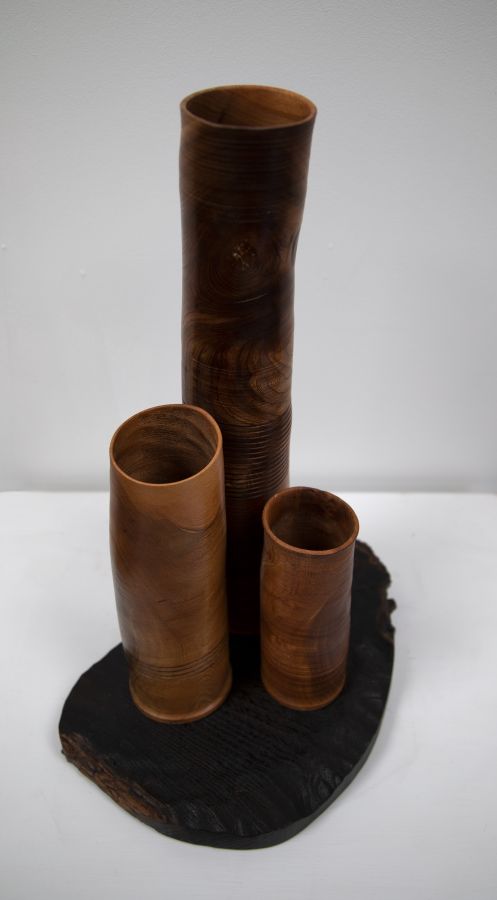
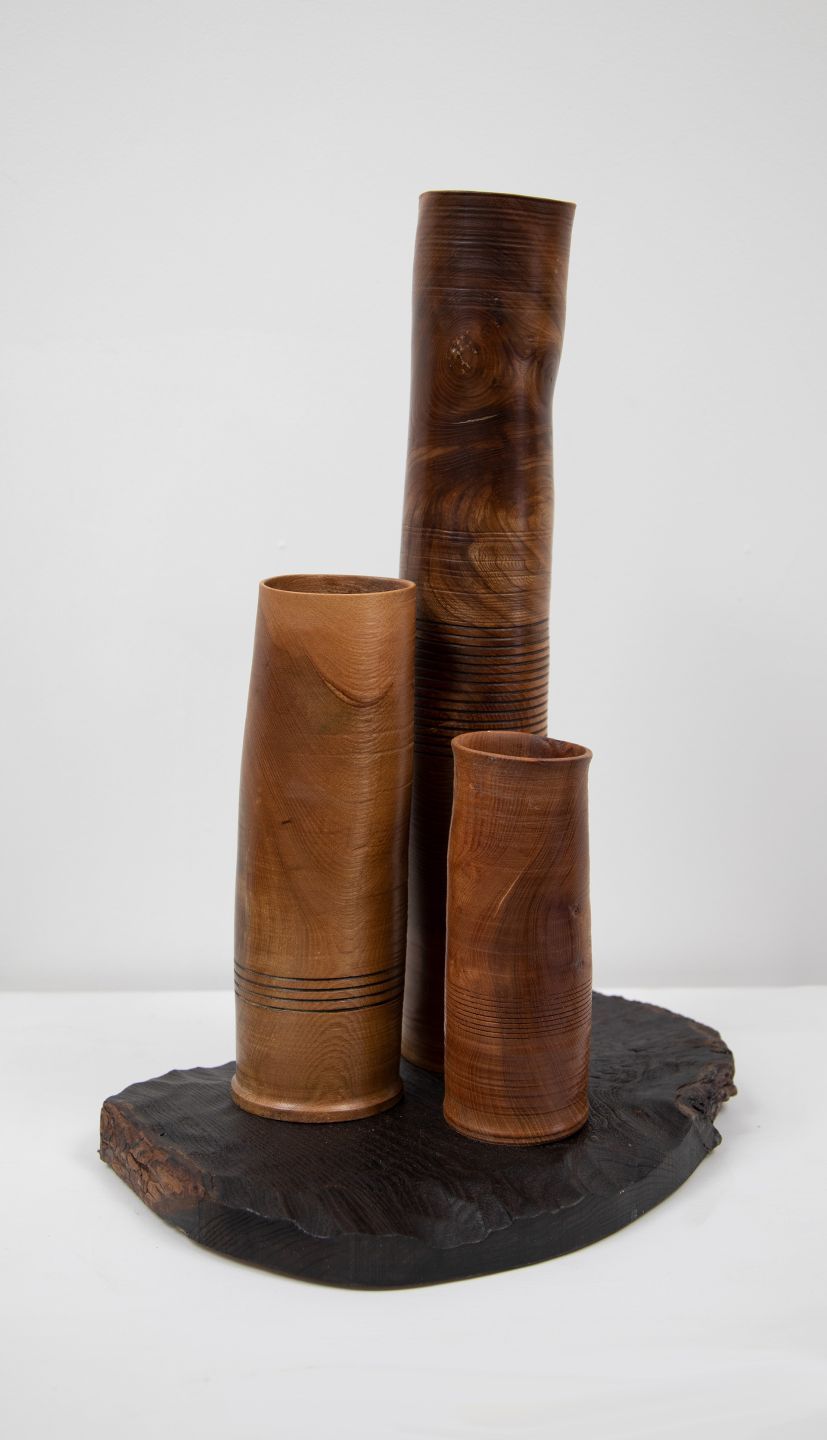
wych elm woodturned sculpture
31.0 x 47.0
cm
£300.00
This piece forms part of a larger body of work called 'fuadach nan gaidheal' (a highland clearance)
This collection of turned vessels represents an eviction of two families during the infamous Clearances in the first half of the 19th century, of which Morvern saw many.
Patrick Sellar (1780-1851) is well know for clearing his lands to make way for sheep. Initially in Sutherland, as Factor for the Duke of Sutherland, he evicted 26 families comprising approximately 150 people from Strathnaver in 1814.
He purchased Acharn Estate in Morvern in 1838 and immediately evicted 44 families, of about 230 people. In 1841 he bought Ardtornish Estate and evicted a further four families. He was not the only landowner in Morvern involved in clearances, but possibly one of the most notorious.
Although Sellar never owned Achranish Estate, he owned land on either side and his son, Alexander Craig-Sellar, later became the owner of Achranich and Ardtornish Estates, and consequently the owner of the tree from the ‘Factor’ is made.
John Sinclair, a merchant from Tobermory, purchased Lochaline Estate in 1821 and built Lochaline House, where he lived until his death in 1863. Sinclair was well known as being a more benevolent landowner and actually built new houses to accommodate some families on his land in nearby Lochaline, the origins of the current village.
The tree from which the ‘Families’ are made grew in the Lochaline House garden and was one of the many probably planted by Sinclair. I have counted about 175 growth rings on the sawn timber.
As both these trees were growing during the Clearances, I felt it fitting to use them to depict this all too common occurrence throughout the Highlands.
Although I have seen similar vessels made by other turners, the inspiration for these came from Ernst Gamperl, a Bavarian artist woodturner, whose approach to and his work, has been the driving influence for my own work. Ernst works and lives in northern Italy, where I first met him some time ago.
All the pieces are made from Wych Elm, and turned from fresh or wet wood cut across the grain. This results in the final organic form and shape, over which I have no control.
My original concept was to create woodturnings which would tell a story through their shape and form and envisaged a work of 6 to 8 curved pieces, depicting a stand of trees bowed over by the prevailing winds. However, in developing the technique, some of the taller vessels were subject to accidental damage on the lathe and became shorter vessels. When they were all placed together on the bench they conveyed to me the image of a distressed family, forced to flee from some deeply unhappy event. I first saw a group of refugees, but this quickly developed to represent the plight of the highland families during the Clearances - being forced to leave their homelands and traditions.
As the work developed, the characters came alive in my imagination as each new turning evolved on the lathe to create the work before you today....
Each vessel is not a carefully planned and perfectly turned vessel, but developed as the wood allowed, with its own individual characteristics, to determine its place in the story.
The 180+ year old tree which grew on the bank of the River Rannoch at Ardtornish produced the two tallest pieces. Their arrogant, superior looks place them as the Factor and his Assistant on the highest plinth. The broken pieces from the vessels that didn't make it are strewn at their feet and represent the broken heart, homes and dreams left behind.
The 175+ year old tree from John Sinclair’s garden made the pieces which became the dejected Families as they are evicted by the Factor.